
Uncommon
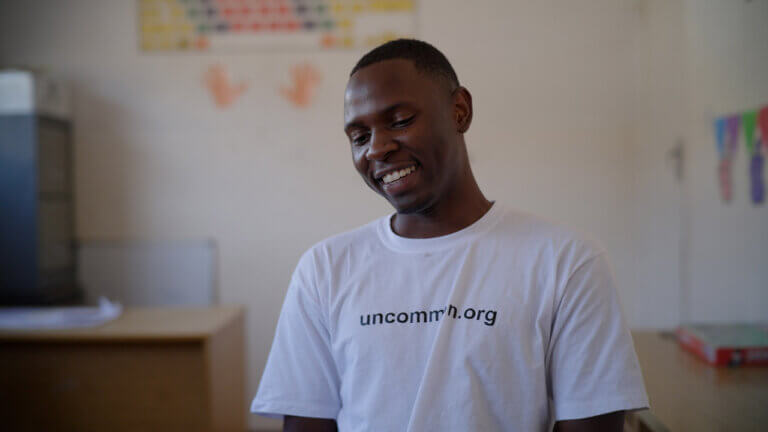
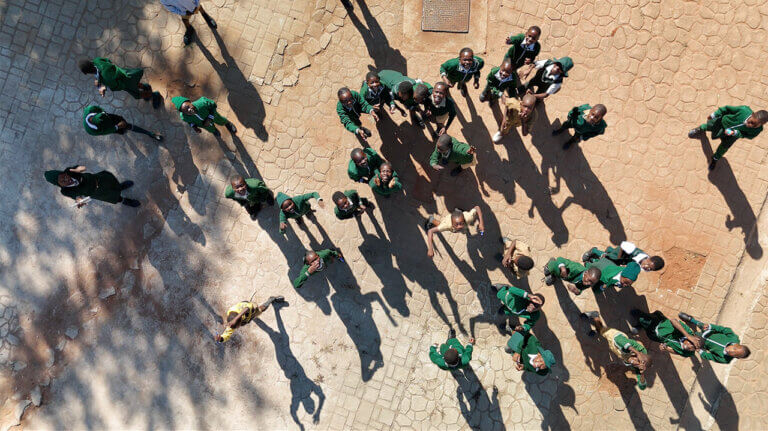
As Africa’s young population drives the continent’s digital growth, Uncommon is helping to bridge the technological divide in Zimbabwe’s classrooms. In a nation where two thirds of the population is under 25, Uncommon plays a key role in equipping Zimbabwe’s youth with the skills needed for today’s tech-driven world.
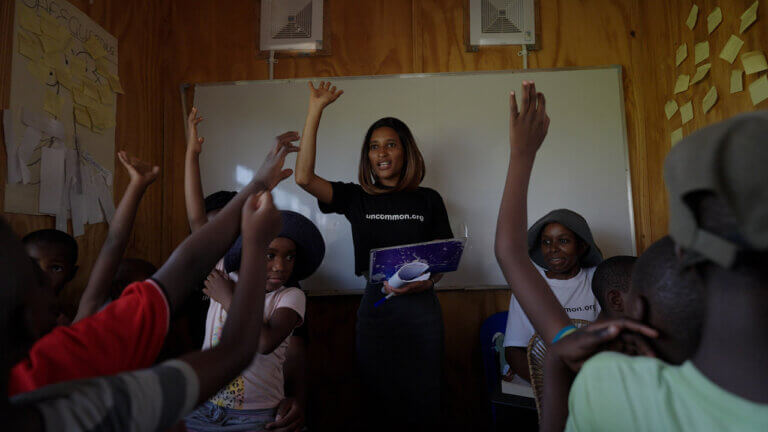
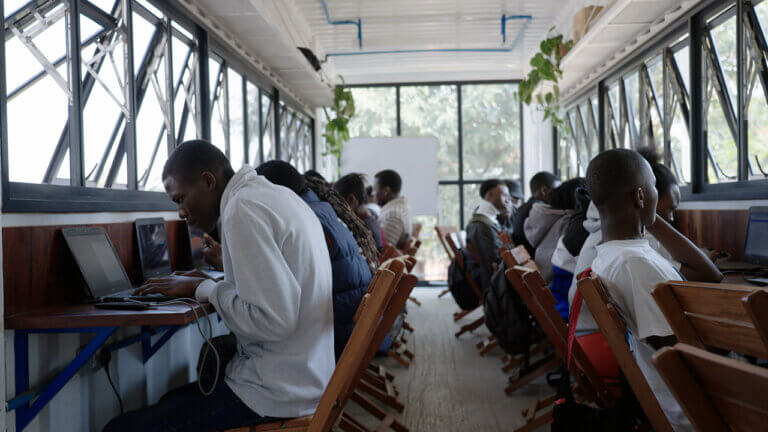
Through our partnership, Uncommon trains local educators and delivers hands-on coding and computer science classes to students across the country. By investing in educators and integrating practical tech skills into the curriculum, Uncommon is helping to create new opportunities within communities and schools. This initiative is building a stronger foundation for Zimbabwe’s economy and preparing its youth to navigate and contribute to the global digital landscape. Discover how Uncommon is transforming lives and paving the way for a brighter future in Zimbabwe by visiting their website.
Photos © Jackson Hyland-Lipski.





Read the story /
In Zimbabwe’s classrooms, teachers learn to code before their pupils
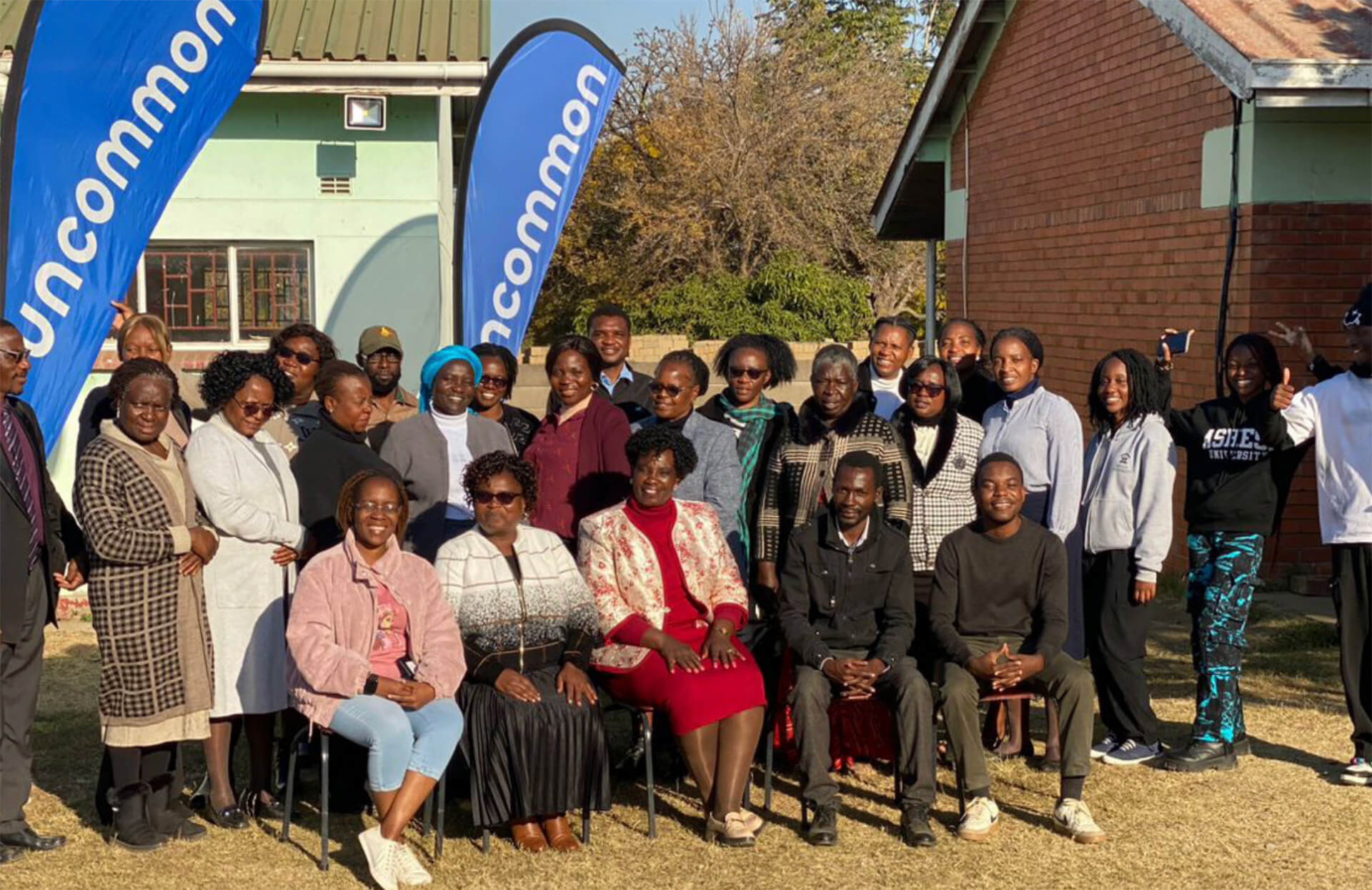
In Harare, technology is changing how lessons are taught. At Haig Park Primary School, headteacher Mrs Kaisi saw a way to modernise teaching and close the gender gap in digital skills.
When Uncommon introduced its teacher training program at a national School Heads’ Conference earlier this year, Mrs. Kaisi invited the team to run an intensive two day workshop at her school.
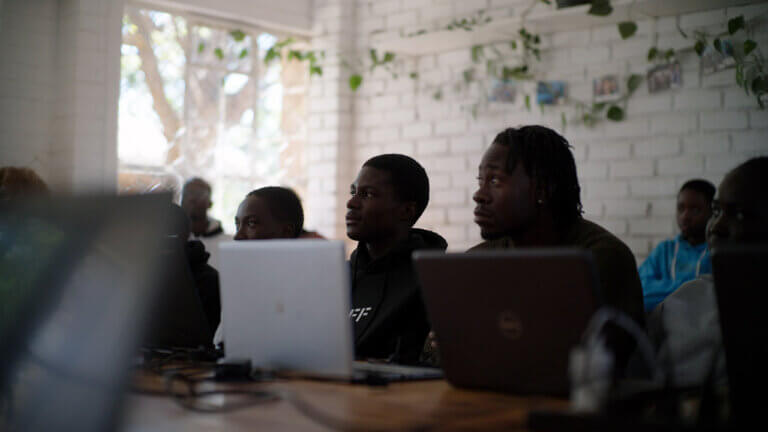
The training, held in Haig Park’s computer lab, was practical and fast moving. Teachers refreshed their digital and coding skills and explored how to use AI in daily lessons.
The teachers can now create their own documents, including lesson plans, schemes and mark schedules, thereby saving time they would otherwise spend on typing,” Mrs Kaisi said.
Teachers also learned about generative AI tools like ChatGPT, Gemini and Perplexity, how to use them for lesson planning and research, and how to guide pupils towards ethical use. With most staff already pursuing further qualifications, she believes the new skills will strengthen both classroom teaching and professional development.
She sees the program as an enabler of Zimbabwe’s heritagebased curriculum. Traditionally the domain of a specialist teacher, ICT is now entering every subject. “The teacher training program aligns with and also enables the implementation of the ICT pillar,” she said, noting that teachers can now access digital resources for an under-resourced syllabus.
The momentum has spread beyond her school. In the nearby Warren Park Cluster, Schools Inspector Mr Muyambo, once trained in ICT and Scratch coding but long confined to administrative work, joined Uncommon’s next pilot cohort himself.
Muyambo saw how the approach demystified coding, integrated technology into ordinary lessons and aligned with the national curriculum.
Uncommon is helping teachers bring technology into the heart of the classroom, where it belongs. If we scale this, we won’t just catch up, we’ll lead.
By the end of the course, Muyambo had become one of its strongest advocates. He urged Uncommon to expand its training team and called for a national rollout “so every teacher can teach ICT and coding, and every student learns to code in the classroom.”
At Haig Park, Kaisi says Uncommon has “left a challenge” with her administration: the organisation delivered its promise to teachers, and now the school must mobilise the infrastructure to sustain it. She plans to work with the School Development Committee to equip every classroom with the technology needed for digital teaching.
The school also hopes to extend the partnership. Its Early Childhood Development IT Play Centre is not yet fully functional, and Haig Park is seeking Uncommon’s support to introduce child friendly coding and robotics, giving learners early exposure to technology.
For schools like Haig Park, Uncommon’s teacher training is creating the conditions for teachers to teach with technology rather than around it, a small but significant shift in how Zimbabwe prepares its students for the digital age.
Uncommon.org is working to bridge the digital divide across Zimbabwe by expanding access to practical technology education and pathways into the digital workforce.
Its core programs train unemployed young adults in ICT, coding and AI skills, while also equipping school students with early digital literacy through after-school coding classes. Uncommon is now partnering with teachers, school leaders and Government officials to embed digital learning in classrooms nationwide through a new teacher training model.
Together, these efforts aim to unlock economic opportunity for young Zimbabweans and build a more inclusive, digitally skilled workforce.
Women are driving community-led sanitation change in Uganda
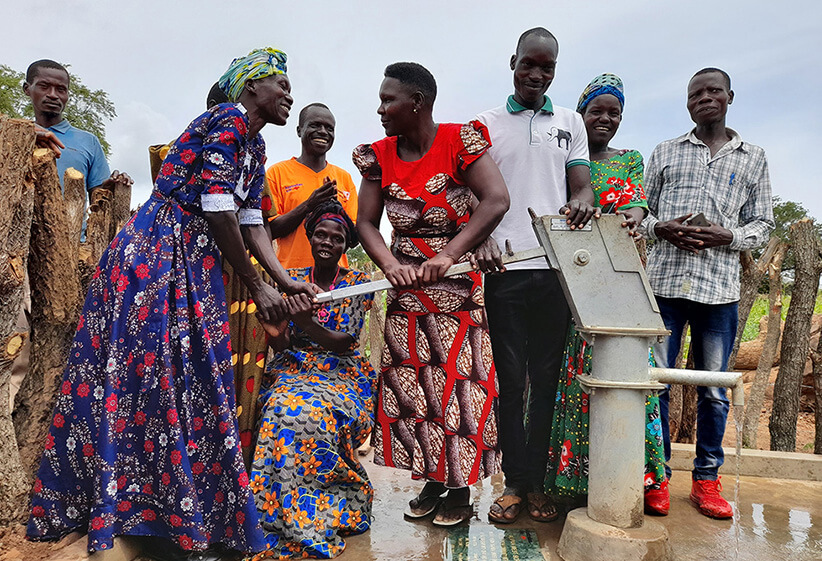
In the rural village of Iceme in Northern Uganda, Dillis recalls a life that felt normal but was fraught with hidden dangers. “Facilities like toilets or pit latrines were things of towns for the wealthy families,” she says. For Dillis and her neighbours, drinking unboiled water was routine. “After fetching water from the borehole, we would drink or use it without boiling. We didn’t know these acts were silent disasters.”
In 2022, World Vision introduced Community-Led Total Sanitation to the area. The program challenged long-standing practices through community-driven education and practical solutions. “We discovered our habits were spreading germs and diseases,” says Dillis. Her household and many others adopted new approaches, including latrines, handwashing stations with soap, and boiling drinking water. “Today, waterborne diseases and other health conditions are no longer our stories,” she reflects.
Dillis is now a local advocate, encouraging her neighbours to adopt similar practices. The change has improved health outcomes and strengthened the community’s sense of agency. As Dillis says, the shift to better sanitation is about reclaiming control over their health and wellbeing.
Driving Job Creation in Zimbabwe’s Tech Sector
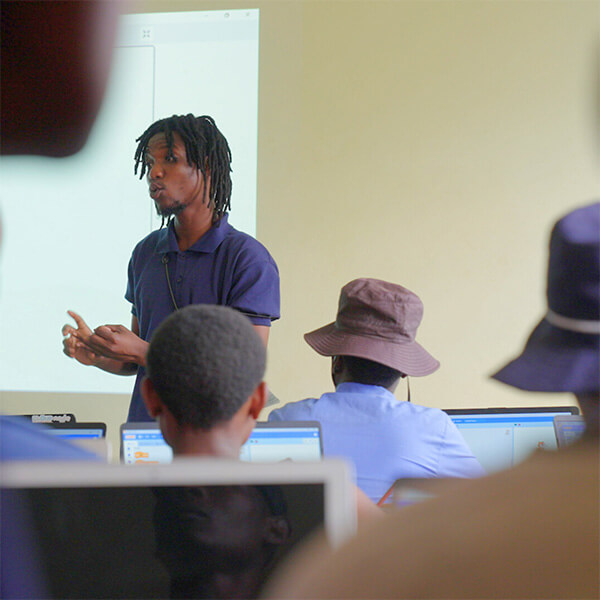
Uncommon is equipping young Zimbabweans with the technical skills needed to thrive in today’s workplace and connecting them with employers ready to innovate. Partner Employers share how hiring Uncommon graduates has strengthened their teams and created pathways for meaningful employment in the country.
At Cleanup Zimbabwe, Gamuchirai’s work has accelerated the organisation’s digital transformation. “Cleanup Zimbabwe has worked with Gamuchirai for the past two months, and we are thrilled with the transformative impact she has had on our company. Her exceptional IT skills and dedication to research have propelled us into the digital age with ease. We are thoroughly impressed with her expertise and work ethic!” – Owen Chiwandire, CEO of Cleanup Zimbabwe.
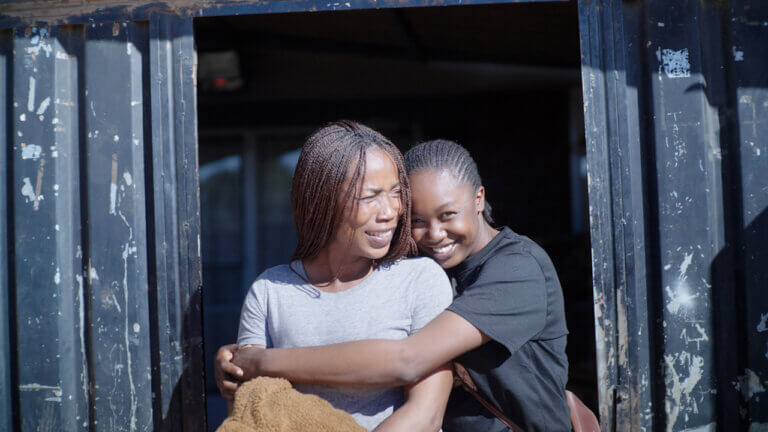
Regina’s talents in design and user experience have left a lasting impact at TD Partners. According to Marian Doset, HR Manager: “Regina’s internship showcased her strong design skills and attention to user experience, leading a successful mobile app redesign that boosted engagement and usability. Her smooth transition to a full-time designer proved her value to our team. We’re grateful to Uncommon for connecting us with such talent and look forward to future collaborations.”
Simba has been instrumental in driving progress at ADE Technology. His technical adaptability and strong communication skills stood out to Jonathan de Jong, Founder of ADE Technology: “Simba was a fantastic addition to my team, demonstrating excellent communication, ownership, and adaptability in developing new technical skills as needed. His contributions were crucial to our progress.”
Regina’s internship showcased her strong design skills and attention to user experience, leading a successful mobile app redesign
that boosted engagement and usability.Her smooth transition to a full-time designer proved her value to our team. We’re grateful to Uncommon for connecting us with such talent and look forward to future collaborations.
Marian Doset
HR Manager, TD Partners.