How intensive, trauma informed support can change a woman’s trajectory
Diane is a victim-survivor of domestic and family violence who was referred to the Miranda Project due to her involvement in the criminal legal system.
Diane is a victim-survivor of domestic and family violence who was referred to the Miranda Project due to her involvement in the criminal legal system, which included having an Apprehended Violence Order (AVO) taken out against her as a result of being misidentified as the aggressor during an incident.
At the time of her referral she was staying in temporary accommodation and there were additional concerns about her mental health following a series of traumatic events. When police attended the home she had shared with her former partner, officers found her confined in a room with a bucket to use as a toilet. Diane told workers she believed she had been held there for several days and she reported that this had happened previously. In the past year, she had also disclosed two separate incidents of sexual assault, one involving a family member and another while staying in temporary accommodation. Diane expressed significant fear of her former partner, who was on remand at the time.
Diane has a two year old child who was living with her grandparents, and her efforts to maintain contact often led to breaches of her AVO conditions. The combination of trauma, instability and being separated from her child had left her extremely vulnerable. Her case worker worked closely with Homes NSW to progress a priority housing application and Diane was referred to the Justice and Equity Centre. Here, lawyers supported her to report the two sexual assaults through the Sexual Assault Reporting Option and to lodge victims’ compensation claims. She received assistance to apply for an Escaping Violence Payment and was referred for domestic violence counselling. The case worker also worked with Diane’s parents and Legal Aid to explore amendments to her AVO conditions in order to reduce the risk of further breaches.
Over time, Diane’s circumstances improved. She submitted sexual assault reports, and Homes NSW approved her for a townhouse. She has begun feeling safer in her own home, and people connected to her past do not know where she now lives. She can speak about her experiences and her daughter without becoming overwhelmed. Diane has not breached her AVO and she has been able to visit her daughter when she is staying with other family members.
For the first time, Diane is also considering making a formal domestic violence report about her former partner, something she previously felt too unsafe to contemplate. These shifts, while gradual, represent what the Miranda Project is designed to achieve: safety, legal stability and a path away from repeated crisis. With a secure home, coordinated support and trauma-informed care, Diane now has the foundations to plan her next steps and rebuild her life with greater confidence.
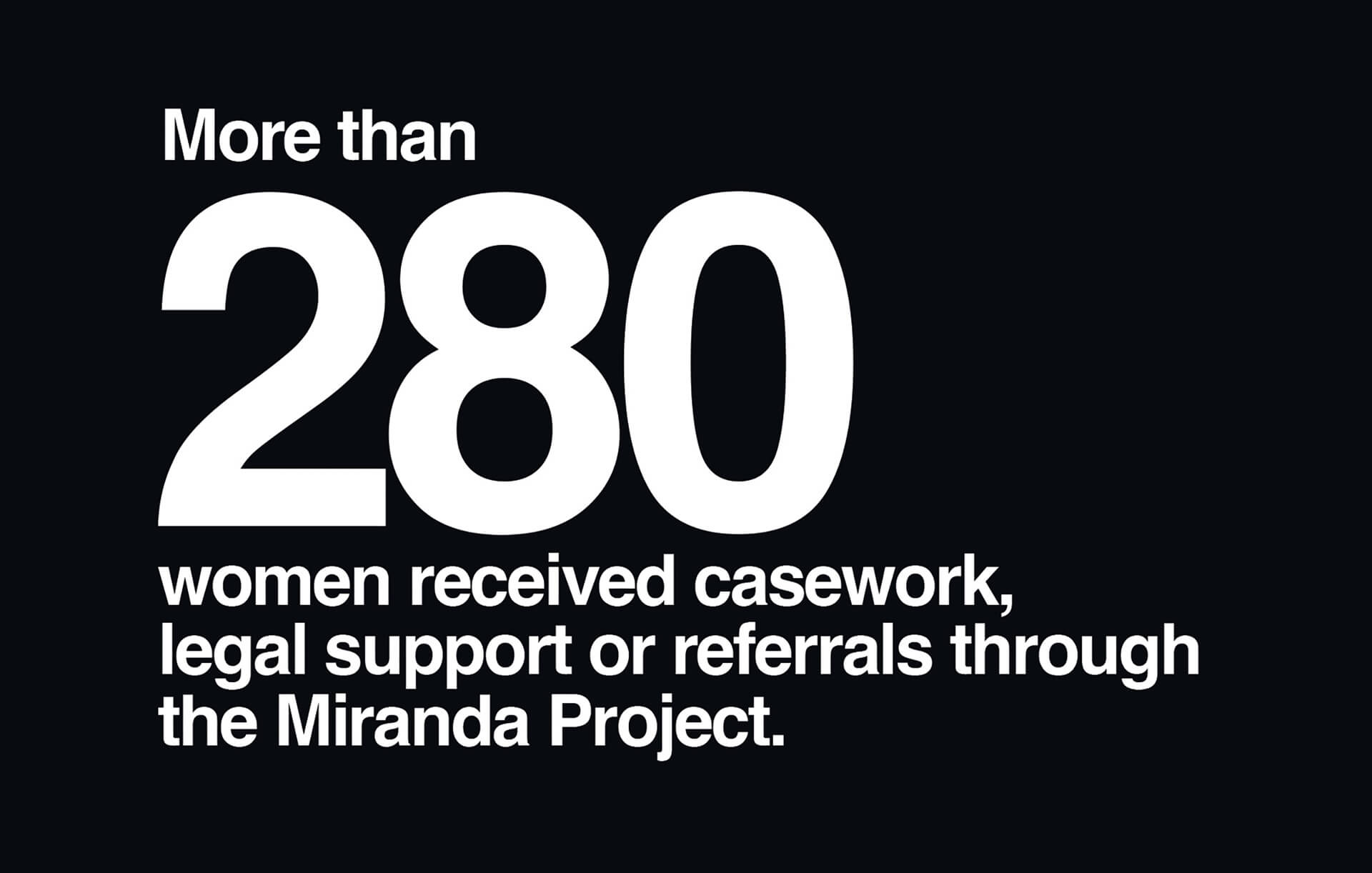
The Miranda Project supports women impacted by both domestic and family violence and the criminal legal system, providing diversionary options alongside effective trauma- and violence-informed therapeutic post-release support. Delivered by the Community Restorative Centre in partnership with Women’s Health Centres, the program assists clients with a range of needs, including housing, health, safety and legal matters. Its focus on recovery, stability and practical support helps women establish viable alternatives to returning to prison.