Investing in innovation for changing cities
We have faith in our innovators and their teams, ideas, ambition and capability.
“Innovation means doing things differently to achieve better outcomes, whether that’s greater impact, quality or efficiency. It draws on new knowledge, traditional wisdom, creativity, and experimentation”, says Abi Taylor, Director Innovation for the Judith Neilson Foundation. For the Innovation Portfolio it means investing in uncertain outcomes.
We know the work will be impactful, but we don’t always know how”.
The aspiration is to drive better urban futures all over the world, creating cities that are more liveable, inclusive, resilient and joyful. The first year of the portfolio has been focused on building relationships across places and sectors, learning to be an ally to innovators who see problems and opportunities differently, and building trust so support can be provided in the way it is needed. “We have faith in our innovators and their teams, ideas, ambition and capability. The Innovation Portfolio gives us permission to work with them to take smart risks, to test, to learn and to evolve”, says Taylor.
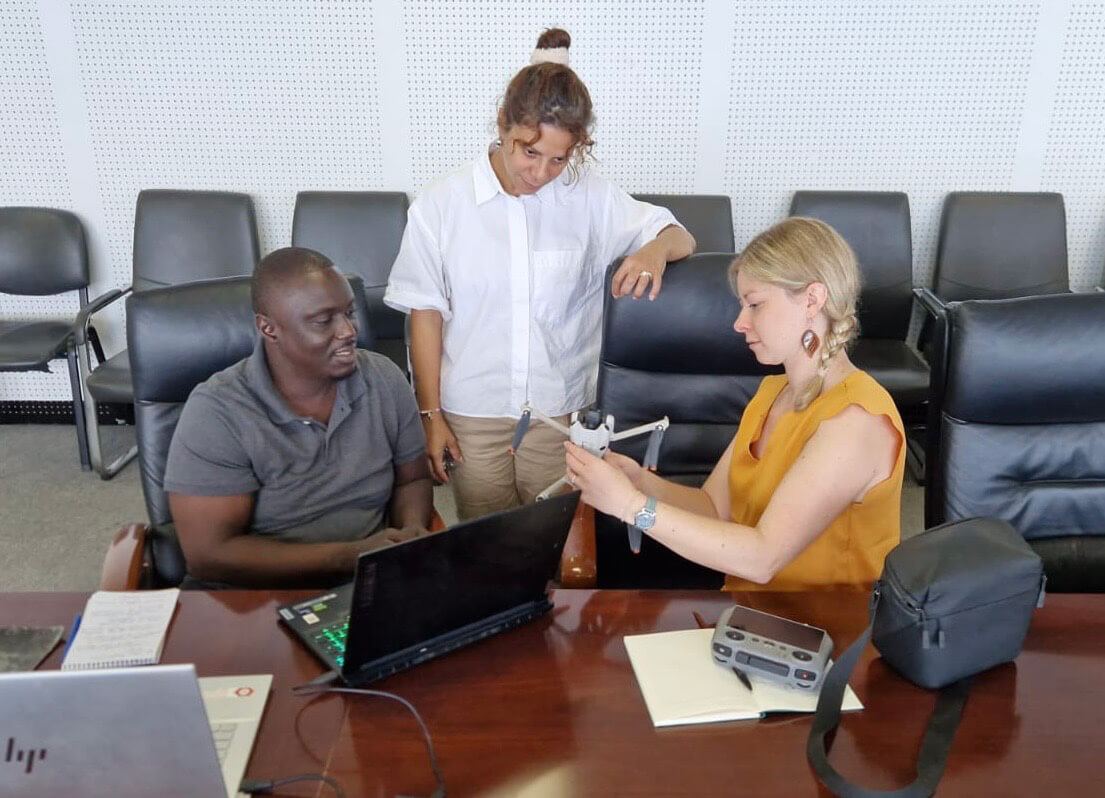
The growing portfolio is diverse. In Sierra Leone, new drone mapping work is underway with the Humanitarian OpenStreetMap Team and their partners, helping local crews chart informal settlements so that governments can plan services and communities can increase their own resilience to landslides and flooding. In Kenya, Ushahidi is future proofing its civic tech platform to strengthen public voice and accountability.
Meanwhile, a disability-led organisation, Assistive Technologies for Disability Trust, is developing Africa’s first early stage investment fund for assistive technology ventures, expanding access to devices that enable participation in education, work and everyday life.
In parallel, the Million Lives Collective is launching an open call fund that will connect innovators and ecosystem actors in cities across Africa, from Dakar to Yaoundé to Nairobi, to design solutions for more inclusive and sustainable urban growth.
Each partnership is a test case, exploring where philanthropic capital can be most catalytic: in building capacity, connecting ideas, and unlocking access to finance.
“Philanthropy can take the early risks that others cannot,” says Taylor. “We can test new models and connect local innovators to global networks of capital, policy and knowledge. This is our learning phase, where curiosity is as valuable as results.”
As the Portfolio evolves, its value will lie not only in impact but also in insight. It is an investment in experimentation itself, a quiet, deliberate effort to understand how innovation takes root, and how philanthropy can help it flourish.