COMACO
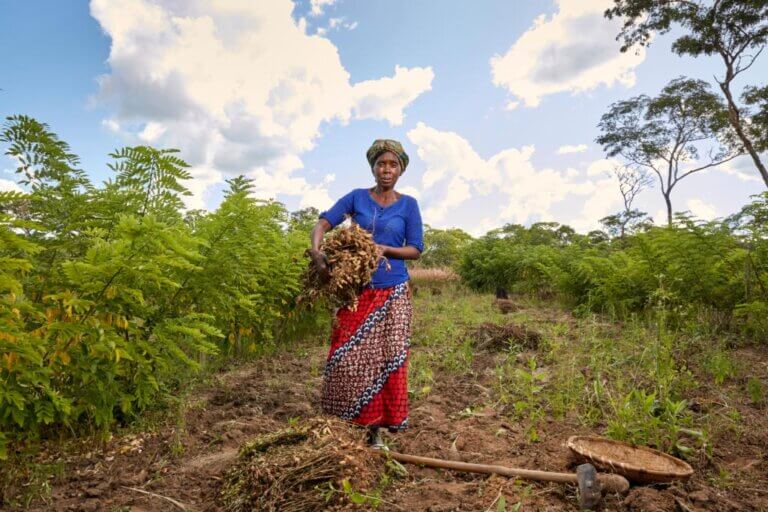
Investing in Zambia’s small-scale farmers and wildlife conservation with COMACO
Community Markets for Conservation (COMACO) creates partnerships with smallholder farmers across Zambia, combining conservation and sustainable farming practices to improve livelihoods and enhance their resilience against future shocks.
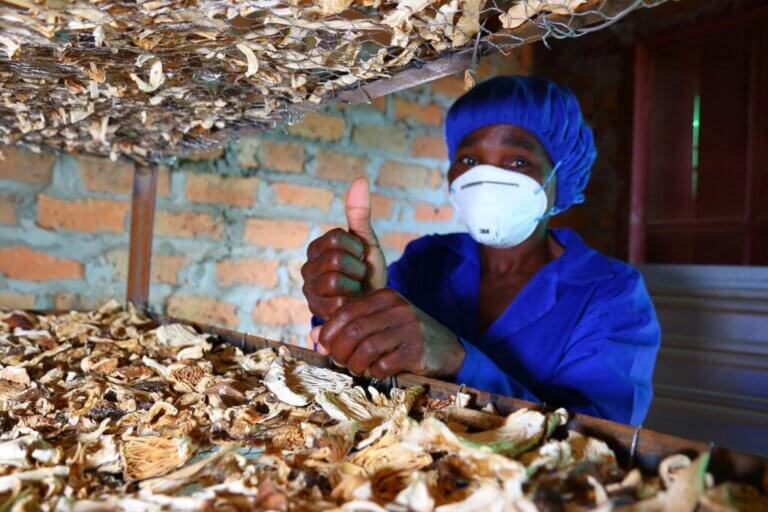
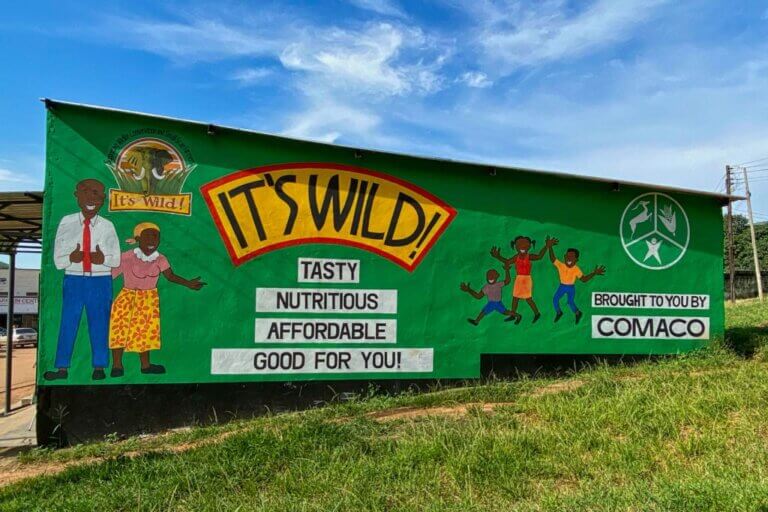
COMACO’s model incorporates agroforestry and market incentives, allowing for higher farming yields without chemical inputs and improving the capacity of farming cooperatives. This feeds into the production of COMACO’s ‘It’s Wild!’ food products, promoting nutrition and economic sustainability.
As a result, incomes are on the rise, food and nutrition security is improving, and wildlife is being revived in the Luangwa Valley and around Kafue National Park, marking a stride toward a sustainable future for Zambia’s communities and their environment. Learn more about COMACO’s work by visiting their website.
Photo Credit: Comaco
Read the story /
Zambia’s smallholder farmers are beating the worst drought in a century
In 2024, the worst drought in a century hit Zambia’s small-scale farmers hard. Fields dried up, harvests shrank, and families faced tough choices about how to feed themselves.
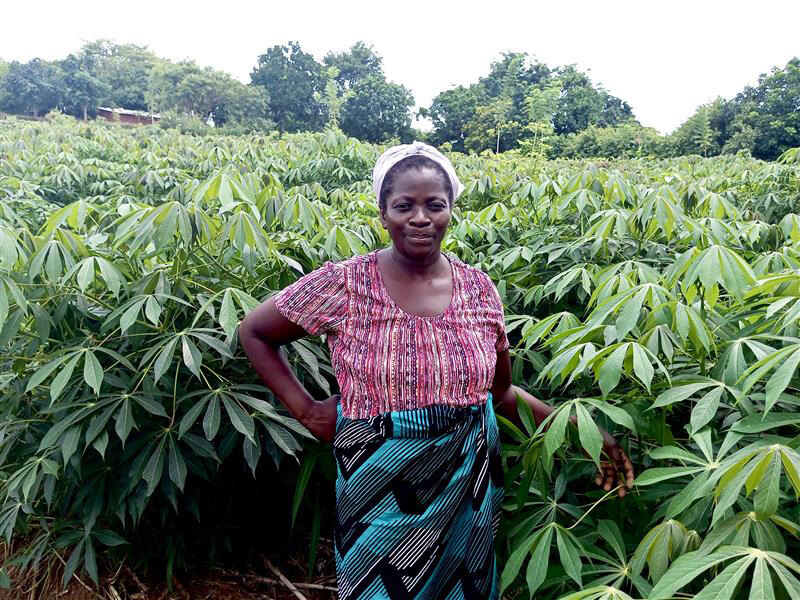
Magret Banda, 68, from Petauke district, has been farming for decades. When the rains failed last year, many farmers in her community lost everything. But Magret had something different. She had planted cassava, a drought tolerant crop that could withstand the dry conditions. With support from COMACO, Magret had adopted conservation farming techniques and turned to climate resilient crops. When the drought came, her cassava grew strong. Instead of losing her income, she expanded her farm, planting even more cassava on two additional acres.
“Cassava has a good market and has helped me earn money even during droughts,” she says.
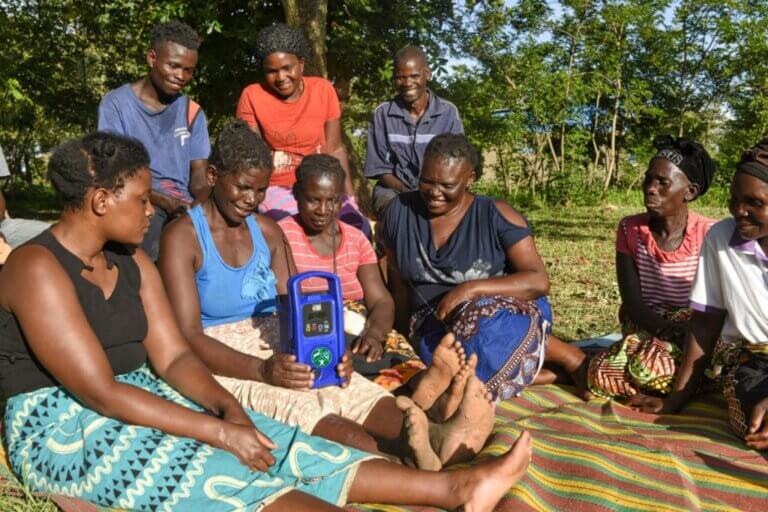
Across rural Zambia, small-scale farmers are adapting to climate change with smarter farming techniques, many for the first time. And, in a nation where economic opportunities often favour men, more than 50% of COMACO’s farmers are women, meaning more girls are staying in school, more families are thriving, and communities are more resilient. Magret is part of a bigger movement in Zambia, one that’s building food security from the ground up.
In Zambia, Community Markets for Conservation (COMACO) is supporting over 340,000 small scale farmers to adopt regenerative agroforestry and transition away from practices that harm soil, forests and wildlife. Farmers gain higher yields and premium prices through COMACO’s “It’s Wild!” food products, linking conservation with sustainable livelihoods.
Hope grows in Zambia: Rosemary’s story
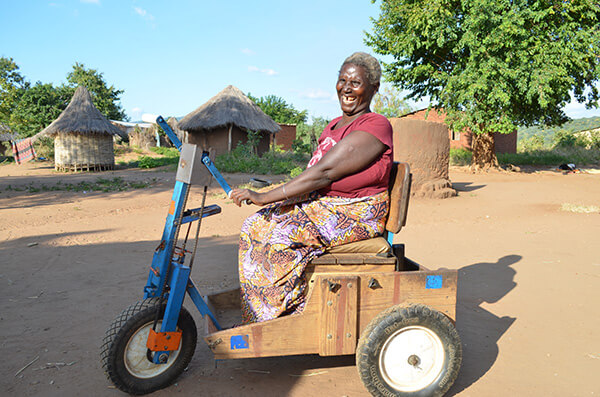
In Zambia’s Luangwa Valley, farming is often at odds with wildlife conservation, as traditional agricultural practices contribute to deforestation and habitat loss. COMACO’s model combines sustainable farming techniques with wildlife conservation, training local farmers to increase their yields without harming the environment. Farmer Rosemary Nyendwa once relied on slash-and-burn methods, but after joining COMACO, she learned how to use agroforestry to improve her harvests sustainably. “I didn’t think these methods would work,” Rosemary says. “But now my farm supports my family and helps
preserve our land.”
COMACO also provides a market for her produce through its “It’s Wild!” brand, offering
a stable income and a direct incentive to maintain conservation-friendly practices. COMACO’s approach is helping to shift the focus from short-term gains to sustainable stewardship. Farmers report improved incomes and a renewed sense of connection to their environment. The ripple effect is clear – communities are benefiting economically while protecting the ecosystems they depend on, fostering resilience in both communities and the landscape.
Driving environmental sustainability with smallholder farmers in Zambia
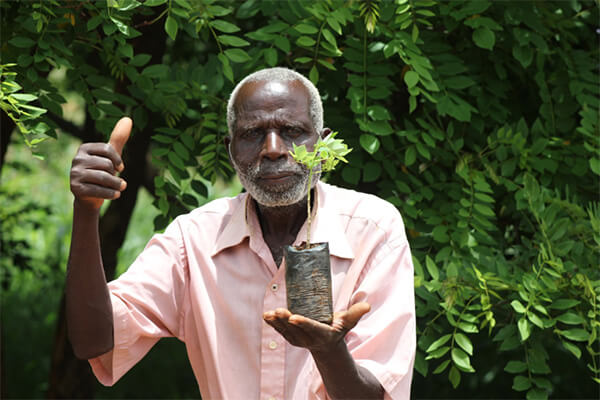
COMACO is revolutionising conservation in Zambia, training over 335,000 smallholder farmers to adopt regenerative agricultural practices. Through our partnership, 26,000 of these farmers have now been recruited.
These farmers have reported increased incomes and secured fair trade contracts, while groforestry initiatives are restoring biodiversity in Zambia’s Luangwa Valley.
COMACO’s approach boosts incomes, restores biodiversity, and connects farmers to fair trade markets, creating a harmonious balance between economic growth and environmental protection.