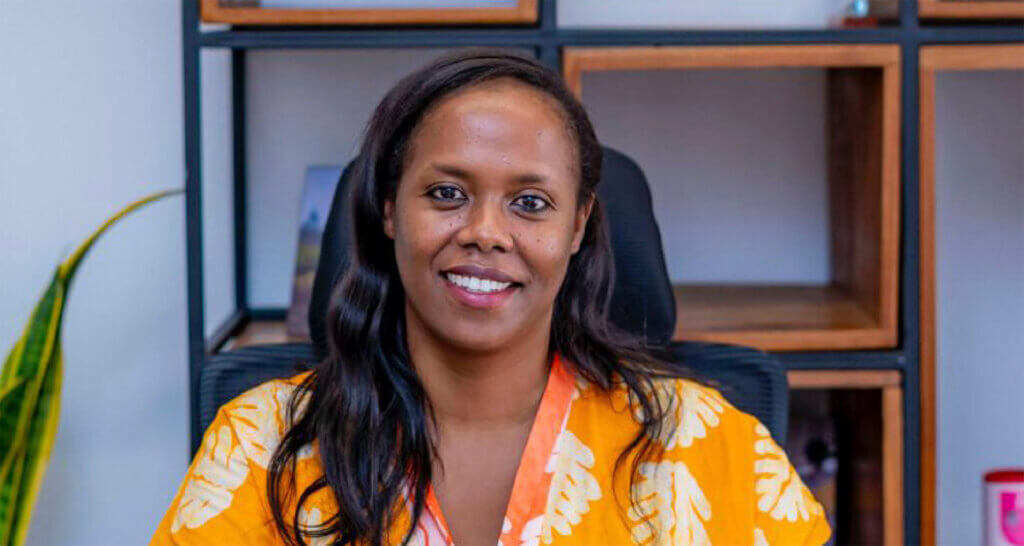
Angela Oduor Lungati
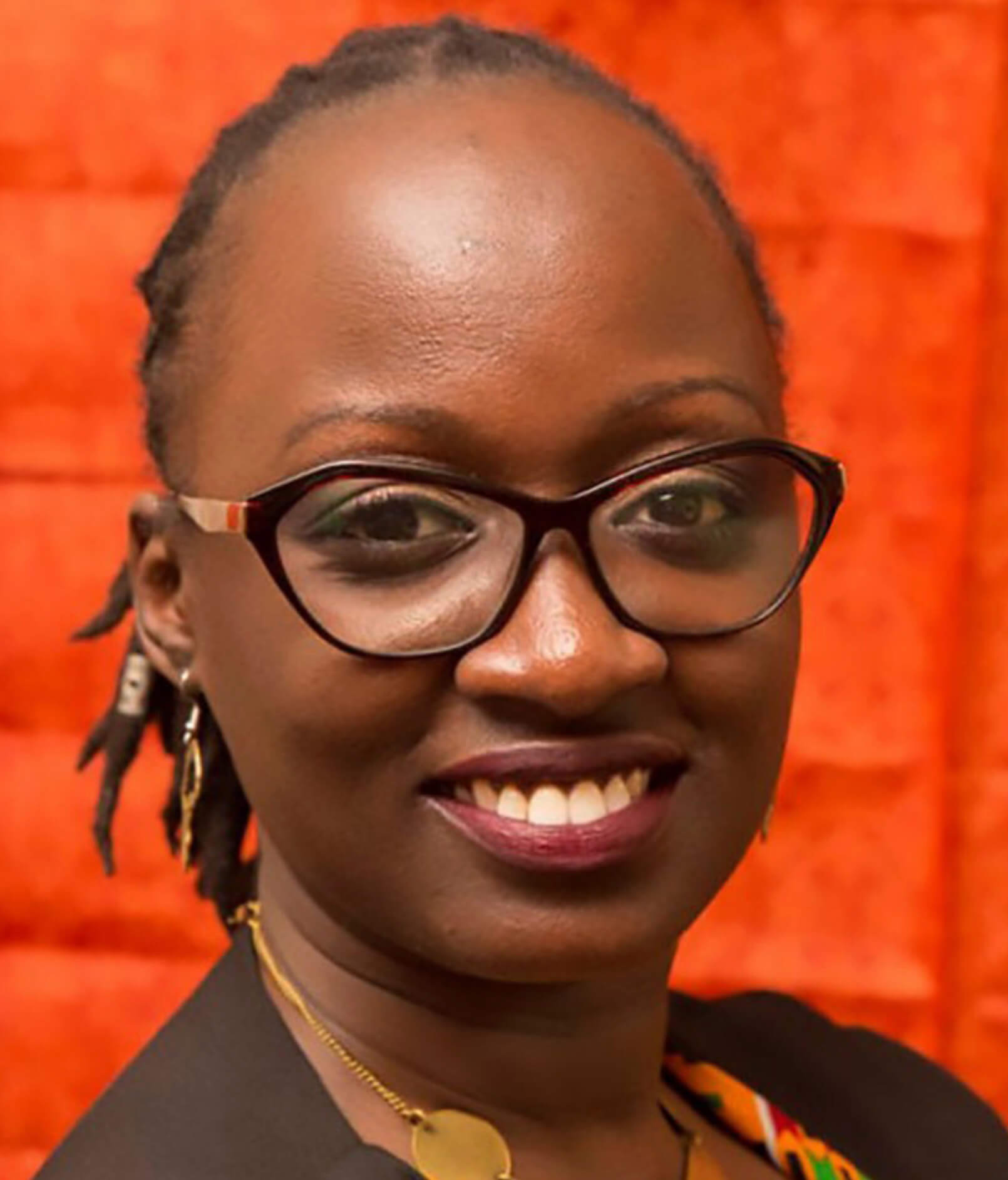
Executive Director, Ushahidi, Kenya
Ushahidi is a global, Kenyan-born technology non-profit that has changed how communities share and use information. First created during Kenya’s 2008 post-election violence to help citizens report what was happening around them, it has since become one of the world’s most influential civic-tech platforms. Today, its tools are used across the world to help people collect local data, strengthen accountability and make their voices count. By turning real citizen experience into actionable knowledge, Ushahidi is helping governments and civic organisations respond more quickly, fairly and transparently, building cities that listen.
When Angela Oduor Lungati walks through Nairobi, she sees a city alive with conversation. “People are constantly talking,” she says. “In matatus, at markets, in WhatsApp groups, ideas are being exchanged all the time. The challenge isn’t getting people to speak, it’s creating systems that actually listen.
As Executive Director of Ushahidi, Lungati leads one of Africa’s most influential civic-tech organisations, a platform built on the belief that collective intelligence can change how societies respond to crisis, govern themselves and grow. Ushahidi, which means testimony in Swahili, was born in 2008 during Kenya’s post-election violence, when citizens were trapped in their homes, cut off from news by a media blackout.
The country was on fire,” Lungati recalls. “We were literally watching cartoons on TV while chaos unfolded outside. Five bloggers came together and said, let’s make a map so people can tell the truth of what’s happening around them. They built a site where anyone could send a message, and suddenly people could see, in real time, what was really going on.
That improvised tool became a model for citizendriven data worldwide. Over the next 17 years, Ushahidi’s open source platform was adapted in more than 160 countries, used to monitor elections, track COVID-19 responses, document human rights violations and coordinate disaster relief. “Our role isn’t to save the world,” Lunati says. “It’s to build tools that empower people to save their own world.
Now, Ushahidi is pushing that mission further through Distant Voices, an ambitious effort to reimagine how communities share information and influence decision making. “For years, we focused on gathering data,” Lungati explains. “But people don’t engage through surveys anymore. They talk, on Facebook, in barazas, in WhatsApp groups. The question is, how do we meet them where they already are?
Distant Voices will use AI-powered translation and messaging to draw insights from natural conversation and turn them into usable intelligence for local governments, funders and civic organisations. “It’s about reducing friction,” Lunati says. “For communities, it’s the friction of being asked to fill in rigid forms. For institutions, it’s the friction of wading through endless data before they can act. Distant Voices bridges both.
She has already seen what can happen when feedback loops fail. In Kenya’s Tana River County, for example, local authorities once introduced a drought resistant tree species to mitigate climate change, only to discover later that the trees were draining the region’s scarce groundwater. “It was well intentioned,” Lungati says. “But if communities had been properly engaged, they could have spoken up early. That’s what citizen generated insight can do: prevent harm before it happens.”
The project is being piloted in several African countries, from Nigeria to Malawi, combining machine learning with deep community partnerships. “In Nigeria we’re working through Facebook groups; in Malawi with UNDP and NYU, bringing in government from the start,” she says. “We want to show that listening at scale is possible.
African languages and realities are still missing from most AI systems,” Lungati notes. “We’ve spent 17 years collecting knowledge from communities that rarely get heard. Now we’re asking how that experience can help build more inclusive, ethical AI, harnessing systems that understand the world they’re describing.
Ushahidi’s ambition is to amplify 100 million voices by 2035. “Reaching this goal will be about engagement, moving from asking questions to having conversations, and from conversations to action.” For her, technology is only the means.
A liveable city is one where people feel heard and what they say matters,” she says. “That’s what we’re trying to build, cities that listen.