Health workers in East Arnhem Land take the lead on family violence response
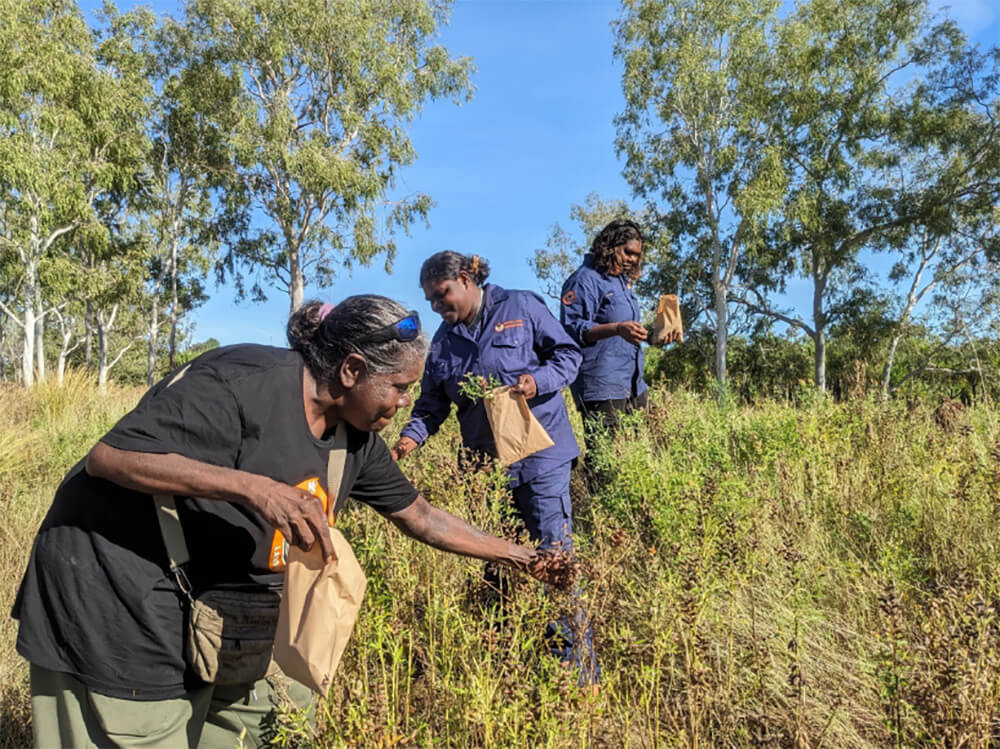
In East Arnhem Land, a remote region of Northern Australia, First Nations health workers are being trained to respond to domestic, family and sexual violence in ways rooted in language and culture.
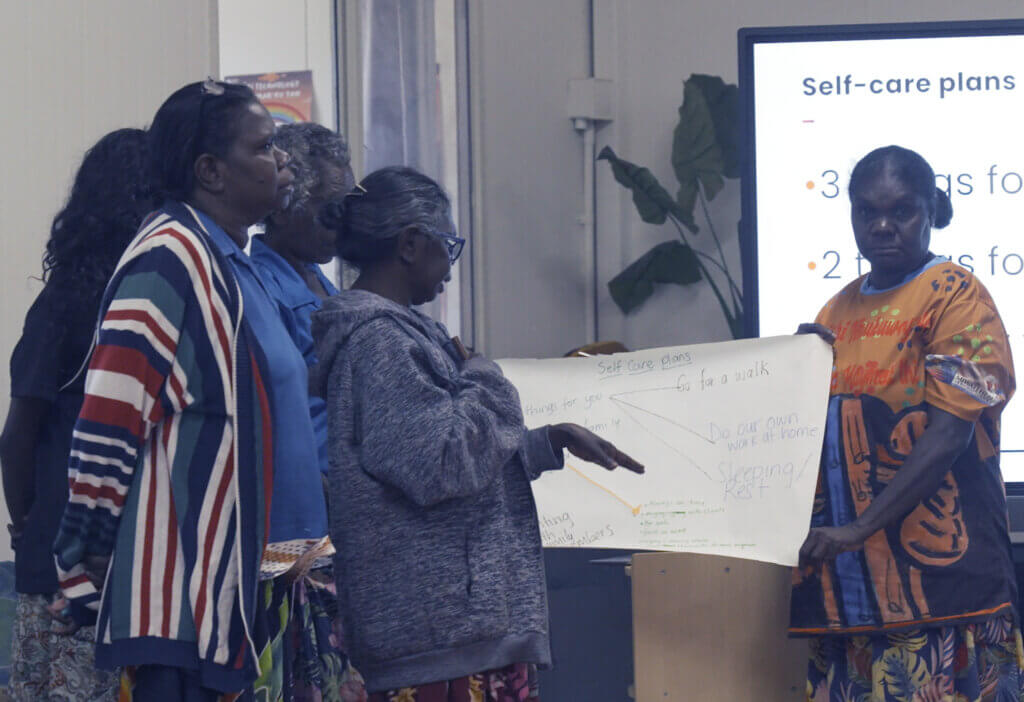
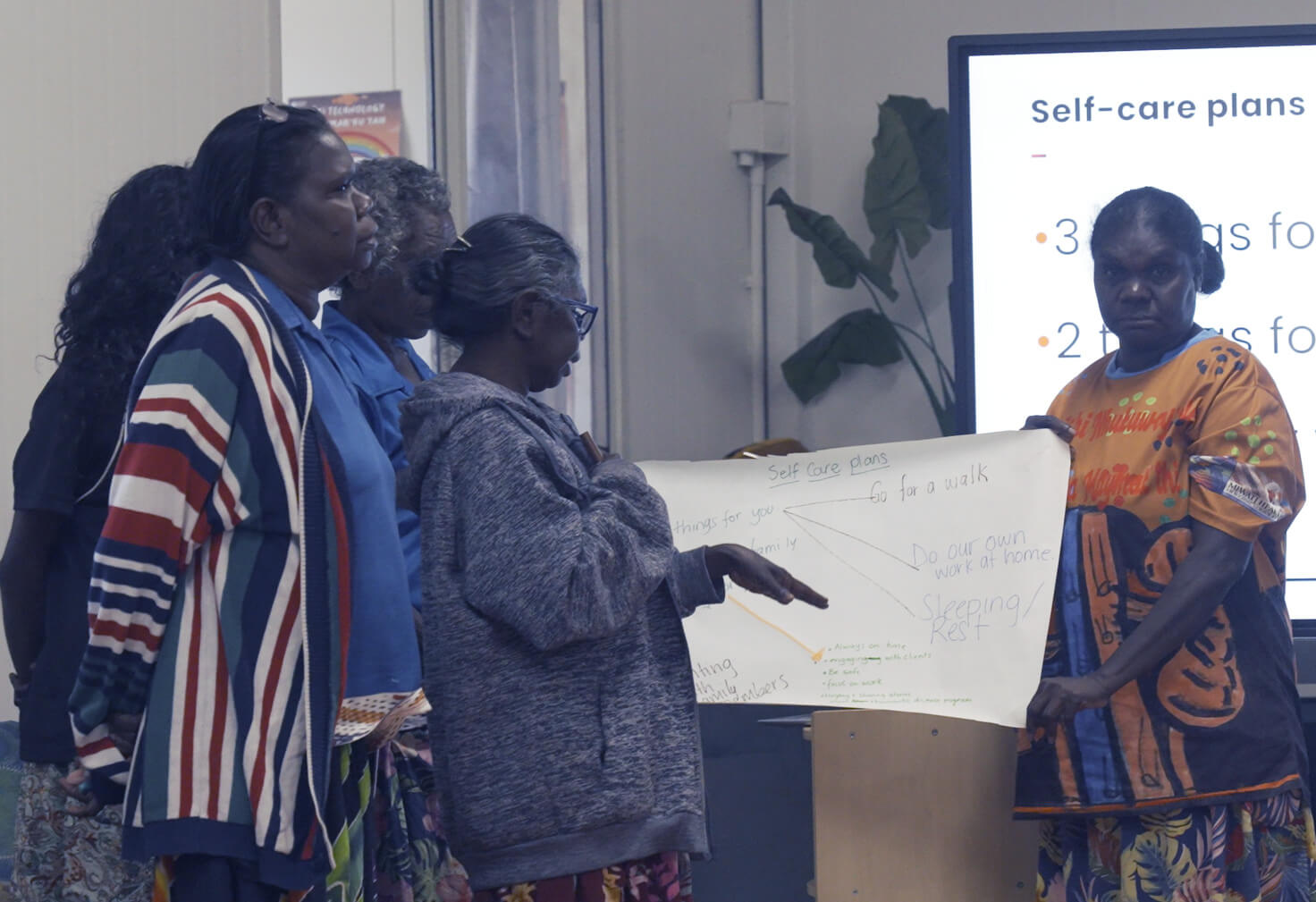
The program, co-facilitated by Aboriginal leaders, reached more than 50 Miwatj Health staff in 2025, alongside other frontline workers in Nhulunbuy, Galiwinku and Milingimbi.
In 2025, Miwatj Health Aboriginal Corporation invited Tangentyere Council’s Prevent Assist Respond training team to deliver workshops for its community-based health and domestic violence staff. Health workers took part across Nhulunbuy, Galiwin’ku and Milingimbi, joined by other frontline responders. For many, it was the first time such training had been brought to their communities rather than delivered from afar.
The sessions were co-facilitated by an Aboriginal trainer with cultural ties to the region and conducted partly in Yolŋu Matha, the local language. This grounded the content in community realities and created space for difficult conversations. “Having a trainer who could deliver in Yolŋu Matha, people’s first language, and was knowledgeable about the area was so valuable,” reflected one participant. Another described the experience as “mind-blowing” because the stories and examples came from the Territory itself.
Training highlighted the strength-based approaches people are already using, so they felt validated by the work they’re already doing,”
one attendee explained. Others noted that the trainers “created safety in the training environment by building genuine relationships” and “didn’t just drop the content and leave”, an approach that was particularly important given the number of staff disclosures during the sessions.
By embedding culture and community knowledge into professional practice, the program is building confidence among frontline health workers and strengthening the local capacity to respond to violence. As one participant put it: “Having the trainer’s Yolŋu knowledge was so important.
Without her, it wouldn’t have been so great. Understanding the community context and the impacts of colonisation made people feel seen.”
Tangentyere Council is strengthening frontline responses to domestic, family and sexual violence. The Prevent Assist Respond Training, designed to centre the voices of victim/survivors, particularly Aboriginal Women, is equipping police, health staff and community workers with culturally grounded tools to support women and prevent harm.