How a Zimbabwean disability centre is reshaping inclusion
How a Zimbabwean disability centre is reshaping inclusion
In Zimbabwe’s Bulawayo, a small centre and school is quietly changing how Zimbabwe thinks about disability inclusion.
King George VI Centre and School is the country’s only institution offering disability inclusive primary, secondary and vocational education, alongside therapy, sign language training and outreach to children with physical disabilities and also the Deaf. Its model is practical, community rooted and focused on unlocking opportunity.
It is estimated that one in ten children in Zimbabwe has a disability, and only one in three of these children is enrolled in school. For many parents, especially mothers, caring for a child with a disability means balancing stigma, economic hardship and limited family support. The Centre’s community outreach program addresses that gap by building networks of mutual support and training parents and communities to create a more inclusive society.
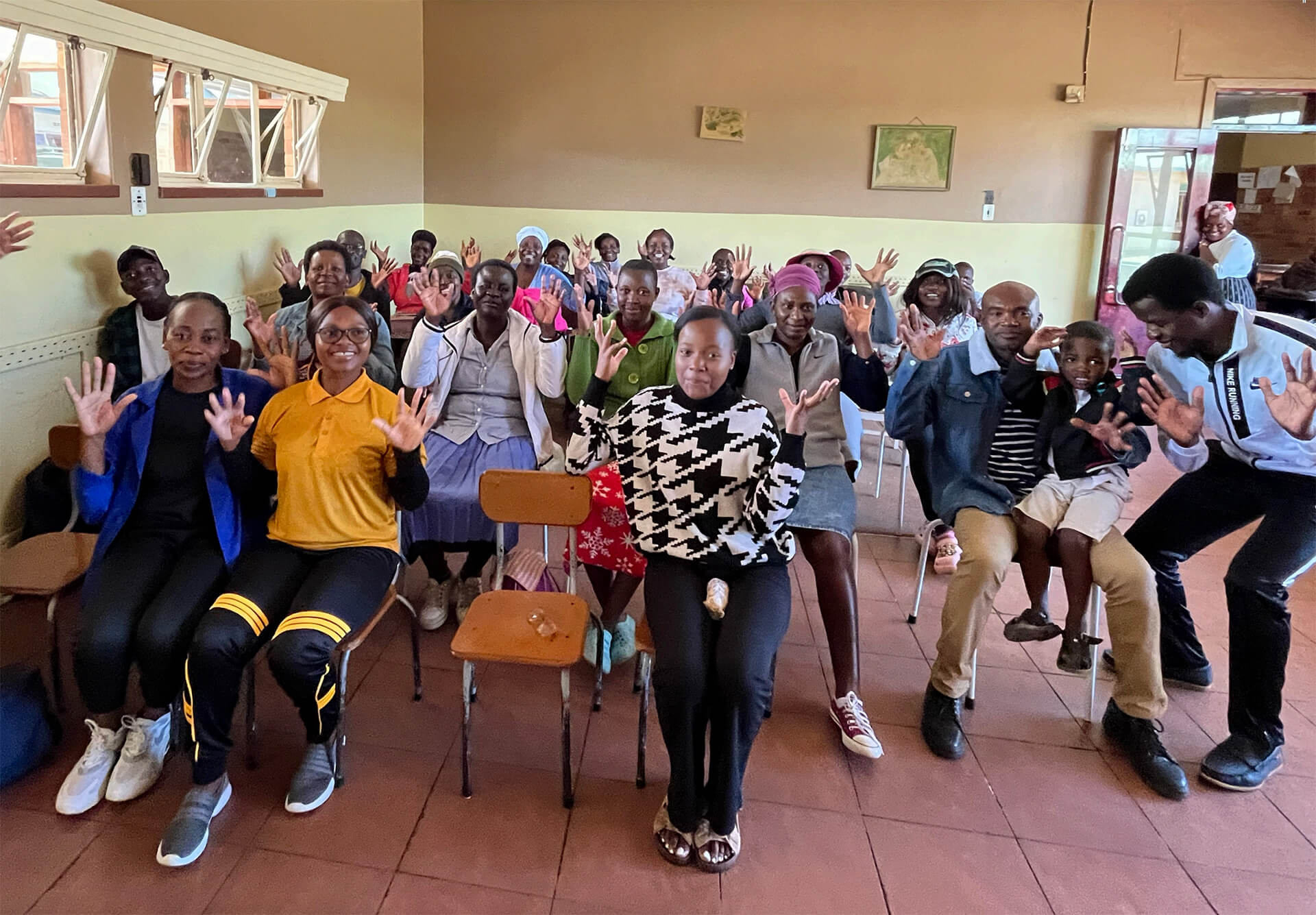
In Bulawayo, parents gather each week at King George VI Centre to learn sign language. Three years ago, the Centre began offering classes to help families of Deaf children communicate more effectively. Attendance was limited at first, mainly because of transport costs. Today, lessons are held not only at the school but also in community centres, teacher training college, hospitals and clinics across the city.
In one session, parents sit in a crowded room at King George VI Centre, repeating hand signs in unison. Many have travelled long distances, driven by a single motivation: to speak with their children.
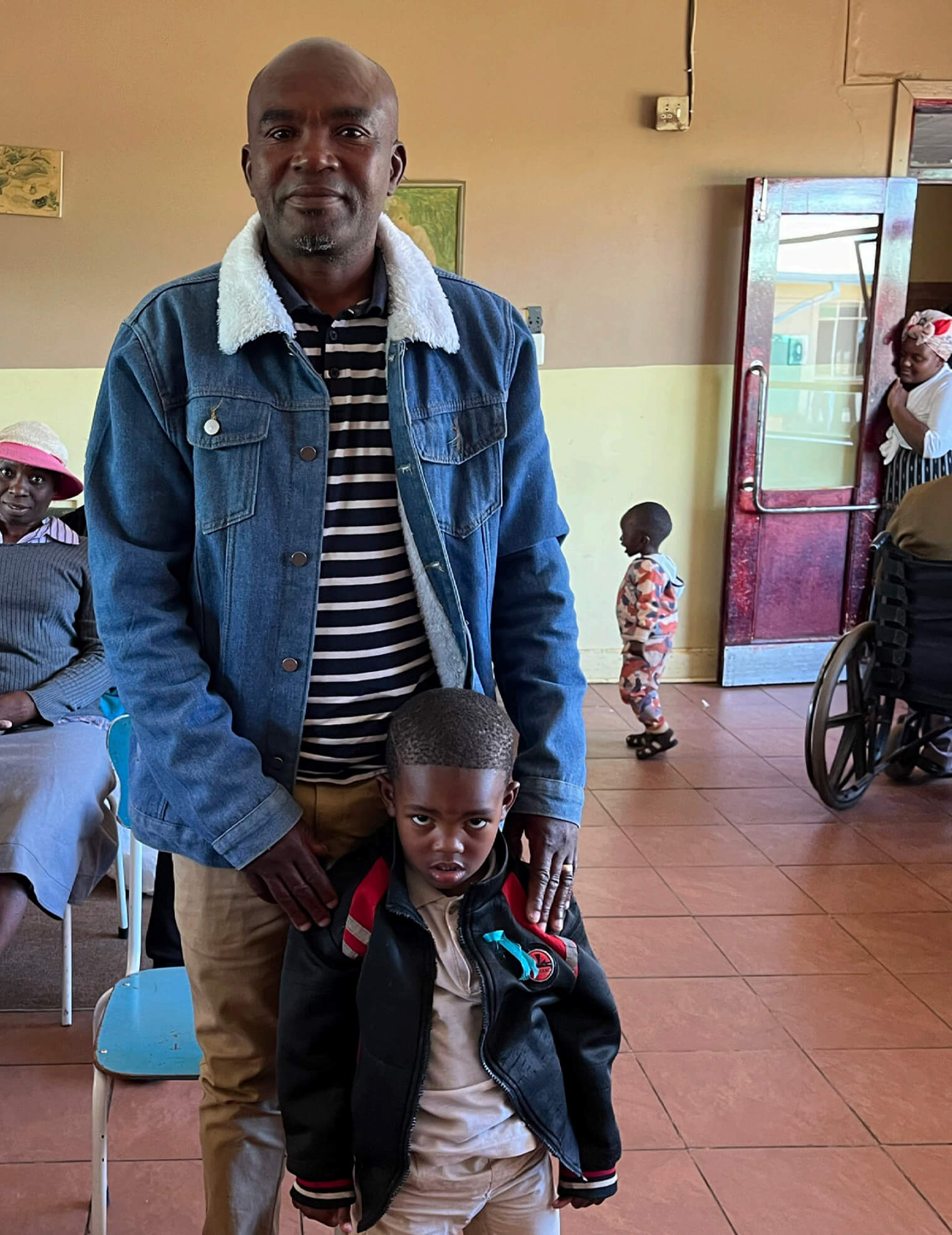 Mr Succeed Chirozve learns sign language at King George VI Centre in Bulawayo, Zimbabwe, to communicate with his daughter and with Sean, a Deaf child he helped enrol at the school. © JNF.
One father, Mr Succeed Chirozve, met a nineyear-old Deaf boy named Sean while visiting relatives in Chinhoyi. The boy had never been to school. Mr Chirozve brought him to Bulawayo, enrolled him at King George VI School and began learning sign language himself. His daughter joined the classes too, so she could play and communicate with Sean. After Mr Chirozve shared the experience at his church, the congregants offered support with the schooling of Sean. Across town, in the high-density suburb of Emganwini, a group of mothers meet each week beside a church, a central point, bringing their children with disabilities for therapy. They socialise while waiting for their children. One child wears a King George VI uniform, as she is now enrolled in the school after receiving therapy from the community-based program.
Before the Centre’s outreach team reached them, most of these children had no access to therapy, which in local hospitals is paid out of pocket. The Centre fills that gap by providing therapy free of charge in the community. Outside the Centre’s support, families faced stigma and superstition.
People here think disability is caused by sorcery,” one mother says.
With help from the outreach team, the parents formed a support group. “We can’t just sit idle at home,” one recalls. “We have to do something.” They now share childcare so they can run small businesses to sustain themselves. “They are my sisters,” another mother says.
At the Centre, a child starts school, a mother steps back into her community, and a family learns a language to communicate with their deaf child. These moments are small, but they change what daily life can hold. Across Bulawayo, families are shaping what inclusion looks like in their own communities, through sign language classes, peer support and shared care that eases the pressure on individual households. Together they are building connection, confidence and a sense of possibility.
Africa has the world’s youngest population and its fastest growing cities. As those cities expand, inclusion work like this will help shape who is supported, who is heard and who can participate. In Bulawayo, the work of King George VI Centre shows that inclusion is where progress begins.
Children with disabilities are gaining access to education and life skills at the King George VI Centre, Zimbabwe’s only institution offering disability inclusive primary, secondary and vocational education. By equipping teachers, parents and health workers with training in inclusive education and sign language, the Centre is strengthening leadership within communities and creating pathways for greater inclusion.